

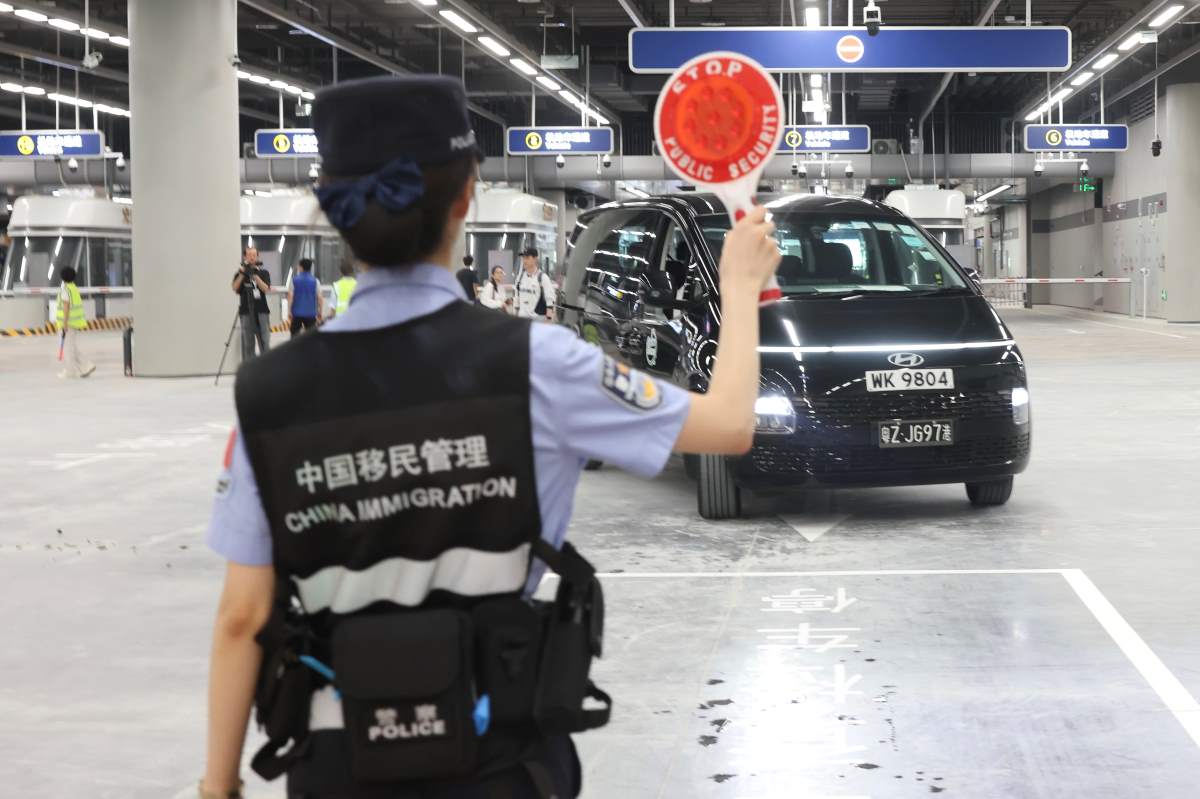
Shenzhen and Hong Kong authorities conducted their largest test yet of the redeveloped Huanggang Port on Saturday, putting about 20,000 civil servants and 1,000 vehicle trips through the facility to assess whether the new checkpoint can handle heavy traffic and emergencies once it opens.
Large scale test puts new facilities under pressure
The large scale exercise ran through the afternoon, with participants and vehicles repeatedly crossing the boundary as officials tested different stages of the clearance process. The exercise was designed to replicate peak hour conditions and identify problems that could affect passenger flow, vehicle processing or emergency response.
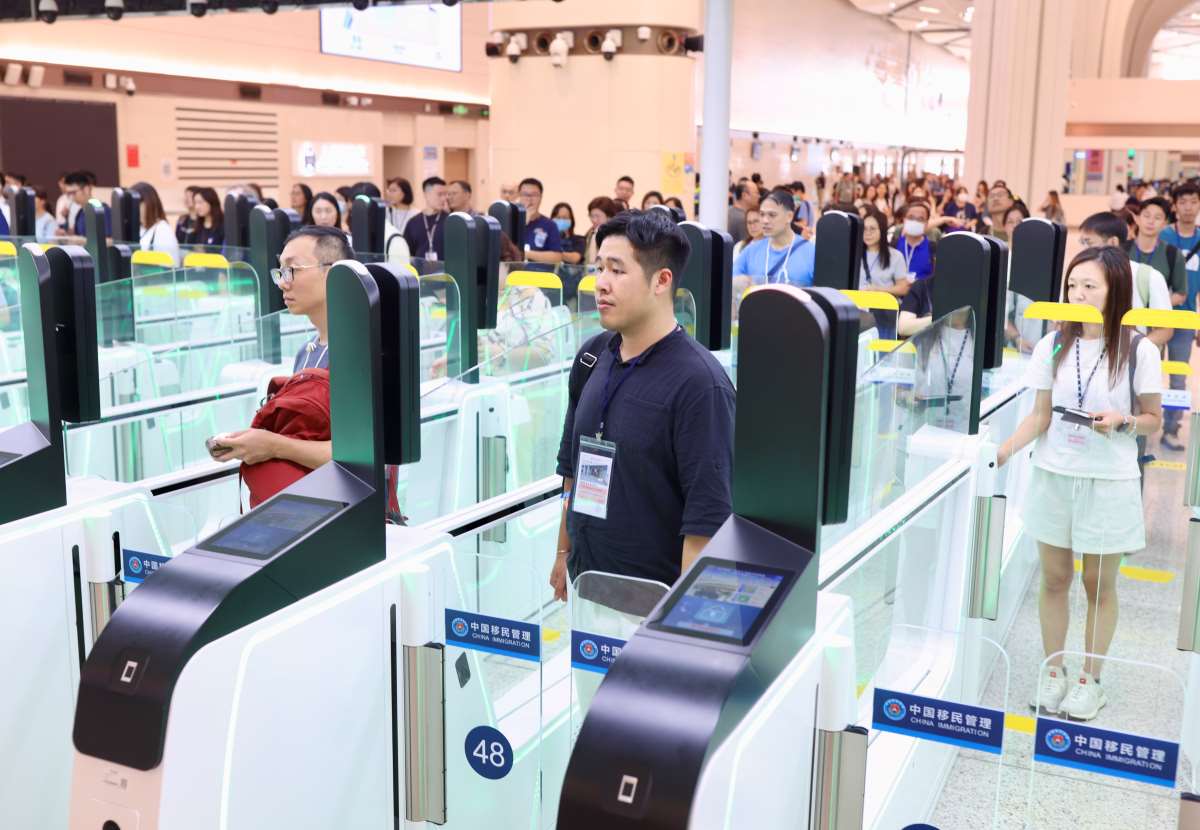
For the first time, all 230 passenger boundary crossing turnstiles and 28 one stop vehicle lanes at the new port were subjected to large scale field testing.
On the Shenzhen side, officials focused on several areas of operation, including tiered and segmented crowd control arrangements, the capacity of security scanners and procedures for inspecting vehicles.
Security scanners tested at peak capacity
The security scanner tests simulated passenger flows of up to 3,300 trips an hour. At one point, the exercise briefly pushed the system beyond normal pressure levels to assess how quickly three sets of scanning machines could process passengers and how much pressure the queuing areas could withstand.
The results are intended to give authorities a clearer picture of how the port will perform when large numbers of travelers arrive at the same time.
The test also allowed officials to examine whether crowd control measures could be adjusted quickly if passenger numbers exceed normal operating levels.
One stop lanes cut vehicle processing time
The vehicle lanes were also tested under conditions designed to mirror actual cross border traffic. The new one stop system combines inspection functions carried out by five departments from Shenzhen and the Hong Kong Special Administrative Region.
The arrangements cover customs, immigration, border control, as well as health and quarantine procedures. By bringing the different inspection functions into the same process, the system is designed to reduce the amount of time vehicles spend at the checkpoint.
An employee overseeing operations at the port said the inspection process had been reduced to slightly more than one minute per vehicle during the exercise.
The shorter processing time is expected to help the port handle a greater volume of cross border traffic, particularly during busy periods.
Emergency scenarios tested
The drill went beyond routine passenger and vehicle movements. Authorities also staged a series of incidents that could occur during normal operations, including requests for emergency medical assistance, disputes involving commuters, suspected smuggling cases and vehicle breakdowns.
These scenarios allowed different departments and frontline personnel to test how quickly they could respond while maintaining the movement of other travelers through the checkpoint.
The exercise followed earlier large scale drills at the Hong Kong Port Area of Huanggang Port as authorities continue preparing for the opening of the redeveloped facility.
Officials review results before opening
Liu Weixiang, director of the Shenzhen Municipal People’s Government Office of Port Entry and Exit, said the exercise had achieved its intended results.
He said Shenzhen and Hong Kong authorities would review the performance of the various systems and refine their plans before the port begins operations.
The latest exercise is part of a series of preparations aimed at ensuring the checkpoint can operate smoothly from its first day. Officials have been carrying out tests and drills covering passenger clearance, vehicle movements, emergency response and other operational arrangements.
Robots to support daily port operations
Technology will also form a significant part of the new port's operations.
Various types of robots are expected to be deployed for tasks including patrols, cleaning and providing information to travelers. Patrol robots will be able to operate around the clock and use intelligent detection systems to identify more than 40 categories of potentially risky behavior.
The systems are designed to detect situations such as people falling, fires or smoke, travelers carrying weapons and smoking.
The technology is intended to support frontline staff rather than replace the wider security and inspection system, giving operators additional tools to monitor large areas and respond to incidents.
Travelers praise faster clearance
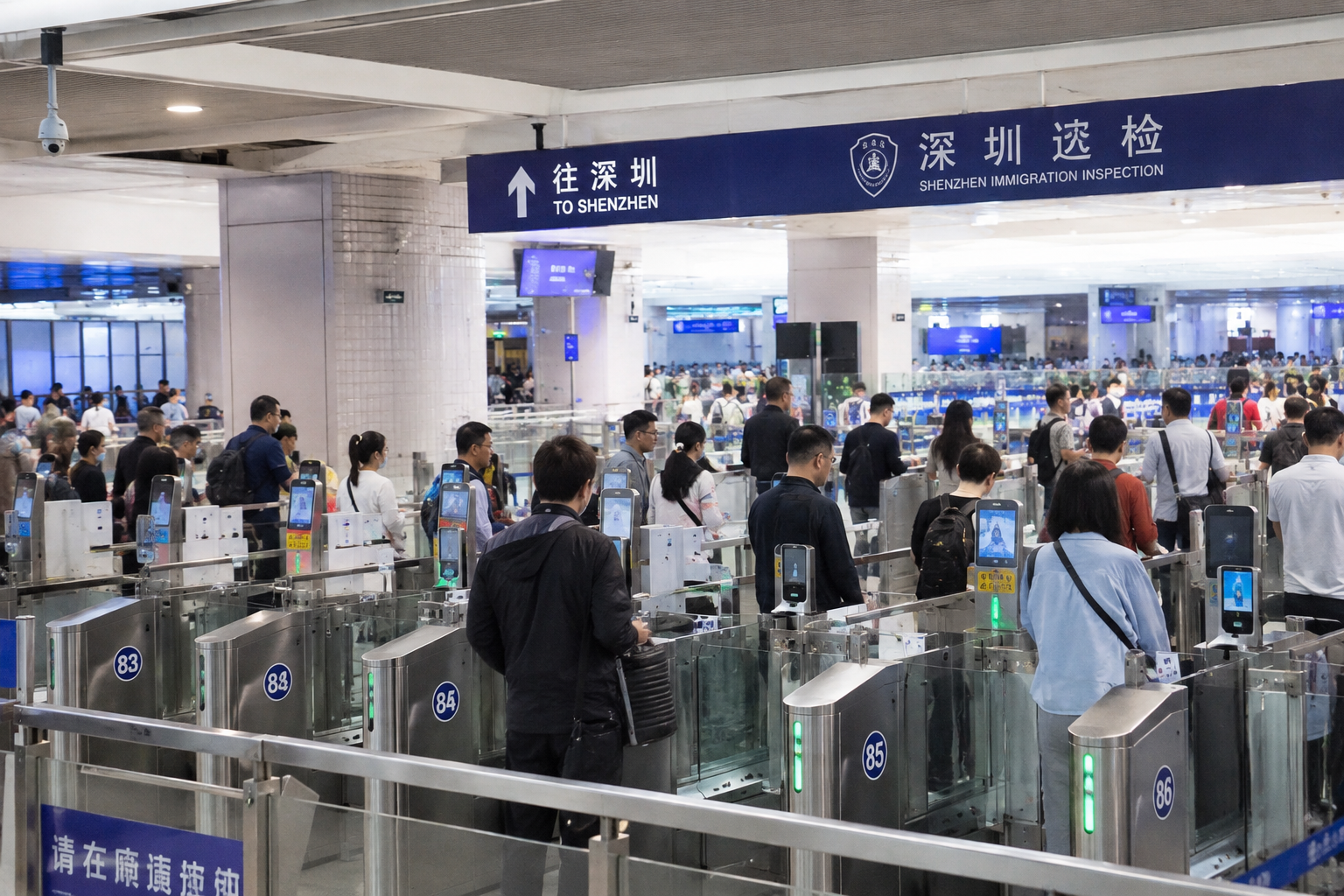
For travelers taking part in Saturday's exercise, the biggest difference was the amount of time required to complete the clearance process.
Kevin Lam, one of the participants, said he was particularly impressed by the new collaborative passenger inspection arrangement. He said the system could reduce commuter clearance time from about 30 minutes to roughly five minutes.
That shorter processing time could influence which checkpoint he chooses when traveling between Hong Kong and Shenzhen.
Lam said he frequently visits Shenzhen for its food and expects the new Huanggang Port to become his third choice of checkpoint after Futian and Luohu.
The new facility's planned 24 hour operation is another attraction for him, particularly when returning to Hong Kong later in the evening.
However, Lam said the passenger environment could be improved further. Given the hot weather and the number of people taking part in the exercise, he suggested lowering the temperature inside the port slightly to make conditions more comfortable for travelers.
Transport links could influence passenger choices
Another participant, who gave his surname as Jiang, focused on the scale and technology of the redeveloped facility.
He said the port's large capacity and high tech design were impressive and could make it more attractive than Futian Port once transport connections on the Hong Kong side are fully developed.
Jiang said the availability of a connecting subway line and other supporting transport services would be an important factor in his decision. If those links are in place, he said, he would be more inclined to use Huanggang because of its shorter clearance time.
Final preparations continue
The comments from participants point to an issue that extends beyond the inspection facilities themselves. The usefulness of a major border checkpoint depends not only on how quickly passengers and vehicles can clear immigration and customs but also on how easily they can reach the port and continue their journeys after crossing the boundary.
Saturday's exercise therefore provided authorities with a test of both the physical facilities and the coordination needed to operate them at scale.
The sheer size of the drill gave officials an opportunity to observe the checkpoint under conditions closer to those expected during busy periods. With about 20,000 civil servants involved and around 1,000 vehicle trips carried out, the exercise placed significant demand on passenger inspection, vehicle processing, crowd management and emergency response systems.
The test of 230 passenger turnstiles and 28 one stop vehicle lanes brought the port's newly installed infrastructure into large scale operation rather than relying solely on smaller simulations.
The security scanner exercise also tested the limits of passenger processing by pushing simulated traffic to 3,300 trips per hour and briefly creating an overpressure situation. Authorities could use the results to adjust staffing, queuing arrangements and emergency procedures before the checkpoint opens.
Officials will now review the findings from Saturday's exercise and make further adjustments where necessary.
The redeveloped Huanggang Port is expected to offer travelers another major cross border route between Hong Kong and Shenzhen, with faster clearance, round the clock operations and a broader use of automated systems among its key features.
For authorities, the next task is to turn the lessons from the stress test into final operating procedures. For travelers, the measure of success will be shorter queues, faster clearance and reliable transport on both sides of the boundary.