

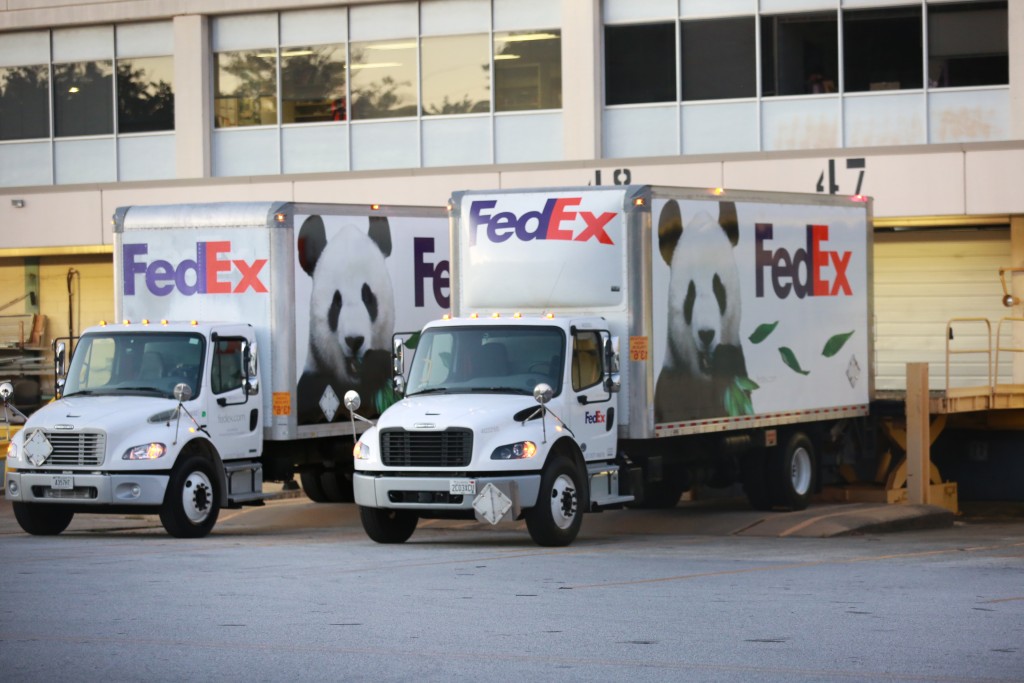
Two giant pandas have returned to Zoo Atlanta nearly two years after the city’s previous pandas left for China, beginning a new 10 year conservation partnership between the Atlanta zoo and the China Wildlife Conservation Association.
Male Ping Ping and female Fu Shuang arrived at Hartsfield Jackson Atlanta International Airport on Sunday, Sept. 27, aboard a dedicated Boeing 777 known as the “FedEx Panda Express.” FedEx donated the transportation for the journey from Chengdu, China, according to Zoo Atlanta.
The arrival restores giant pandas to Zoo Atlanta after the zoo’s original 25 year partnership with China ended in 2024. The new agreement gives Atlanta another decade with the animals while continuing cooperative work on panda care, research and conservation.
Zoo Atlanta President and CEO Raymond B. King called the arrival a historic moment for the city and state, saying the zoo was pleased to welcome the two pandas and continue its work with Chinese conservation partners.
But Atlanta residents hoping to see the new arrivals immediately will have to wait.
Ping Ping and Fu Shuang are now being kept away from public view in a biosecure area of the zoo’s new giant panda complex. They will undergo a routine quarantine period of about one month while veterinary and animal care teams monitor them after the international journey. Zoo officials have not yet announced a public debut date.
Two pandas, both born in 2020
Ping Ping and Fu Shuang were both born at the Chengdu Research Base of Giant Panda Breeding in China in 2020.
Ping Ping was born on March 17, while Fu Shuang was born on Oct. 18. The zoo identifies Ping Ping as the male and Fu Shuang as the female in the new Atlanta pair.
Their journey to the United States was arranged through the new conservation agreement announced by Zoo Atlanta in April. The agreement established a new International Cooperative Research Agreement on Giant Panda Conservation between the zoo and the China Wildlife Conservation Association.
The agreement also extends a relationship that has already lasted more than two decades. Zoo Atlanta first began its giant panda program in 1999, creating a long running partnership focused on the care and study of the species.
The earlier partnership produced seven panda offspring between 2006 and 2016, including two sets of twins. Lun Lun and Yang Yang, the original Atlanta pair, became particularly familiar to generations of zoo visitors during their years in Georgia.
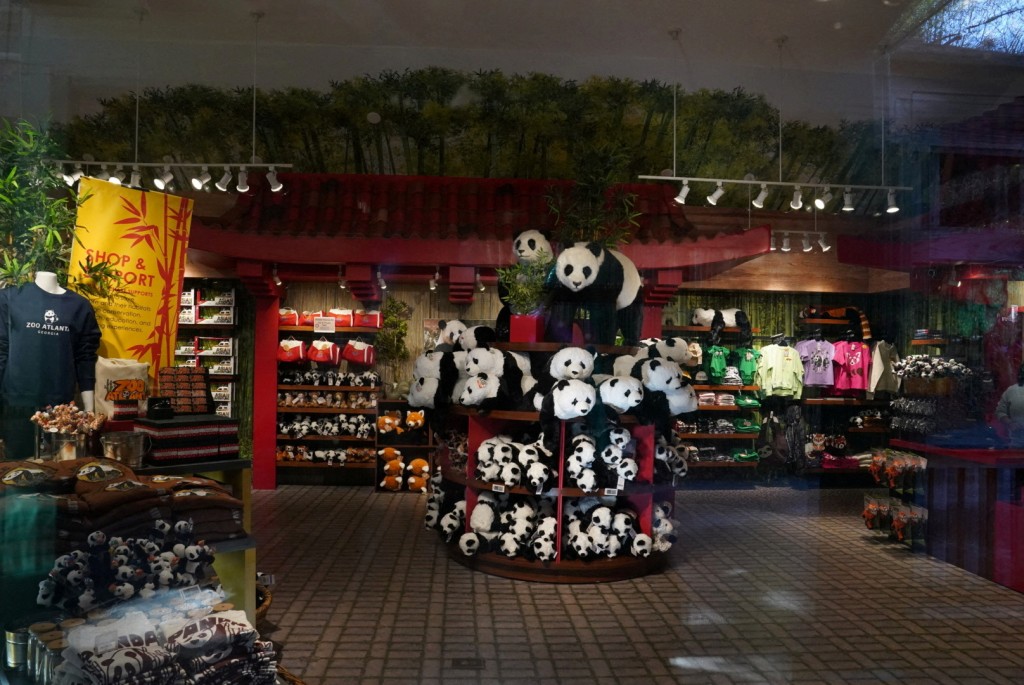
Atlanta’s pandas left in 2024
The arrival of Ping Ping and Fu Shuang follows a two year gap in Atlanta’s panda program.
Lun Lun, Yang Yang and their two youngest offspring, Ya Lun and Xi Lun, left Zoo Atlanta for the Chengdu Research Base in October 2024 after the previous agreement ended. Their five older offspring had also returned to China earlier and now live at the Chengdu facility.
Their departure marked the end of a 25 year chapter for Zoo Atlanta. The return of pandas under the new agreement now starts another.
Zoo Atlanta is currently one of three US zoos housing giant pandas, alongside the Smithsonian’s National Zoo in Washington, D.C., and the San Diego Zoo. It is also the only zoo in the southeastern United States with giant pandas, according to the Atlanta zoo.
The pandas are part of a long running Chinese conservation program
Giant pandas have become closely associated with China’s international relationships. China maintains ownership of pandas sent to zoos abroad under cooperative arrangements, and cubs born through such programs also belong to China.
Chinese President Xi Jinping referred to pandas as an “envoy of friendship” between China and the United States during his visit to Washington on Sept. 24. He announced that Ping Ping and Fu Shuang would soon travel to their new home in Atlanta.
The announcement came just three days before the pandas arrived in Georgia.
The arrangement is often described as “panda diplomacy,” a term used for China’s practice of placing giant pandas with zoos and institutions in other countries as part of broader diplomatic and conservation relationships. The animals therefore carry significance beyond their role as popular zoo exhibits.
For Atlanta, however, the immediate focus is on animal care. The new agreement is intended to continue cooperation between American and Chinese specialists in professional panda husbandry, research and conservation. Zoo Atlanta has said previous cooperation with Chinese colleagues helped support habitat restoration, nature reserve management and ranger programs.

Why visitors have to wait
International transport is only the first stage of the pandas’ move.
After arriving in Atlanta, Ping Ping and Fu Shuang entered quarantine rather than going directly into the public exhibit. The roughly month long period allows animal care and veterinary teams to monitor the pandas and reduce the risk of introducing disease while they adjust to their new surroundings.
The zoo has also been preparing its panda facilities for their return. Zoo Atlanta began preliminary design work on an expansion of the giant panda complex in February 2025, with construction continuing as preparations progressed.
That means the new arrivals are entering a facility that has been prepared specifically for the next stage of the zoo’s panda program.
The public will eventually get the chance to see the animals, but Zoo Atlanta has said it will announce the opening date after the quarantine period and other preparations are complete.
A species that has recovered but remains vulnerable
The return of pandas to Atlanta also comes against the backdrop of decades of conservation work in China.
The giant panda was once classified as endangered by the International Union for Conservation of Nature, but the species was reclassified as vulnerable in 2016 after evidence of population recovery. WWF currently estimates that about 1,864 giant pandas remain in the wild.
The improvement did not remove the threats facing the species.
Wild pandas remain dependent on forest habitat in southwestern China, where bamboo makes up most of their diet. Habitat fragmentation, infrastructure development and other human pressures can isolate panda populations and restrict access to food and breeding areas. WWF continues to classify the giant panda as vulnerable.
That conservation work is one reason cooperative programs such as the new Atlanta agreement extend beyond displaying pandas to the public. Zoo Atlanta says its partnership with Chinese colleagues has included information exchange and work related to professional panda care, research and conservation.
For now, Ping Ping and Fu Shuang remain behind the scenes as they settle into their new surroundings. Their first public appearance will mark the next step in a panda program that began in Atlanta in 1999 and has now entered a new 10 year chapter.
Would you visit Zoo Atlanta to see Ping Ping and Fu Shuang when they make their public debut?