

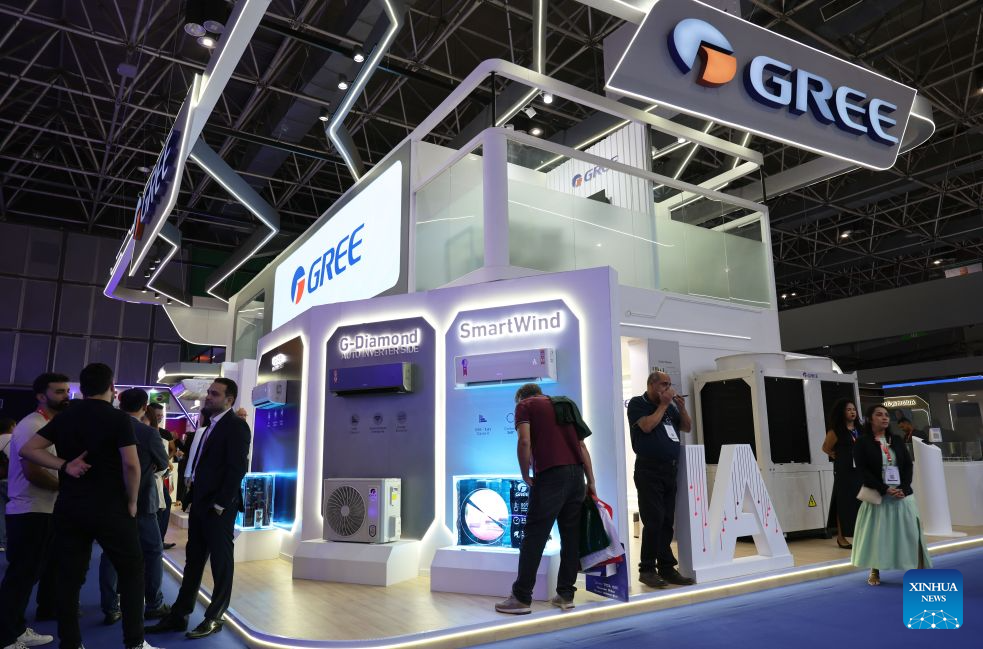
China’s manufacturing sector is testing a new approach to vocational education as home appliance giant Gree Electric Appliances opens its own technical school in Zhuhai, Guangdong province. The school has attracted more than 8,000 applicants for its first intake of over 300 students, raising hopes for closer links between education and industry while prompting questions about long-term funding, academic standards and young people’s freedom to choose their careers.
Zhuhai Gree Technical School welcomed its first students in early October. Founded by Gree Electric Appliances, the company led by prominent businesswoman Dong Mingzhu, the institution offers a three-year programme designed to prepare young people for technical careers in manufacturing and related industries.
The initiative goes beyond the partnerships that Chinese companies commonly establish with existing universities and vocational institutions. Rather than relying primarily on recruitment programmes, workplace training or specialised classes, Gree has taken responsibility for operating a school and shaping students’ development from the beginning of their technical education.
That approach could help employers address shortages of skilled workers, particularly as manufacturing becomes more reliant on automation, connected devices and advanced production systems. Yet education specialists warn that a school must serve students as well as its sponsoring company. Employment opportunities matter, but so do academic foundations, personal development and the ability to pursue a different path later in life.
Gree attracts thousands of applicants
The new school offers nine majors, including electromechanical engineering, smart manufacturing and the Internet of Things. Annual tuition ranges from 9,000 yuan to 15,000 yuan, equivalent to approximately $1,345 to $2,240 based on the figures provided for the programme.
Students will spend three years studying technical subjects, with practical instruction accounting for more than 70 percent of the curriculum, according to reports. Graduates will also receive priority consideration for employment at Gree and companies within its industrial supply chain.
The prospect of learning directly from a major manufacturer appears to have generated considerable interest. More than 8,000 people applied, including some students with high academic scores, although the first intake numbered just over 300.
For families weighing educational costs against future employment prospects, a programme connected to an established company may offer a clearer route into work than a conventional course with less direct contact with employers. Students can gain practical experience while becoming familiar with industrial equipment, production processes and the technical requirements of manufacturing jobs.
Gree's reputation may also reassure parents concerned about whether vocational education can provide stable employment and opportunities for advancement.
However, the school's initial popularity does not by itself establish how well its graduates will perform in the labour market. Those outcomes will depend on the quality of instruction, the relevance of its qualifications, the availability of suitable jobs and whether students can apply their skills beyond the company that trained them.
The programme's long-term success will therefore require more than strong recruitment figures. It will need to demonstrate that students receive a sound education and develop capabilities that remain useful as technology and employment demands change.
Guangdong faces a major skilled-worker challenge
The school is opening in one of China's most important manufacturing regions. Guangdong has 141 technical and vocational schools with nearly 690,000 students enrolled, according to the figures supplied in the report.
The province's skilled workforce totals 22.01 million people, including 8.27 million highly skilled workers. Both figures rank first nationally, reflecting the scale of Guangdong's industrial economy and its demand for people who can operate, maintain and improve complex production systems.
Manufacturers increasingly need workers who understand both machinery and digital technology. Smart manufacturing, for example, can require knowledge of automation, sensors, equipment maintenance and data-driven production processes. The Internet of Things connects devices and systems so they can exchange information, creating additional technical demands for businesses adopting connected industrial equipment.
Traditional vocational education can struggle when course content fails to keep pace with these changes. Employers may introduce new technologies faster than schools can update equipment, teaching materials and practical training. Graduates can then arrive at work with qualifications but limited experience of the systems they are expected to use.
Many Chinese businesses have tried to address this gap by working with established vocational schools and universities. Common arrangements include jointly operated industry-academic colleges, training centres and specialised classes designed around employers' needs.
Gree's model places more of the responsibility within the company itself. Supporters believe this could make it easier to align classroom instruction with real manufacturing requirements and give students more opportunities to practise relevant skills.
But Guangdong's large existing vocational education system also demonstrates why enterprise-run schools are unlikely to be the only answer. The province needs skilled workers across a wide range of industries, including businesses that cannot afford to establish and operate their own educational institutions.
Experts see potential beyond recruitment
Gong Xiaofeng, director of Shenzhen University's Institute of Emerging Industry Development in the Greater Bay Area, said Gree's initiative encouraged companies to take a more active role in the full process of talent development.
In his assessment, the model addresses several weaknesses in conventional school-enterprise cooperation. These include a mismatch between educational content and industrial requirements, insufficient depth in professional skills training, and limited opportunities for students to learn in authentic working environments.
A company with an established manufacturing operation can provide access to practical equipment, industrial facilities and experienced personnel. These resources can help students connect classroom concepts with the tasks they may encounter after graduation.
Gong also said that strong industrial platforms, practical training conditions and employment resources could help parents feel more confident about their children's prospects. Students may also gain an earlier understanding of potential career paths, encouraging more young people to consider advanced manufacturing.
That could benefit companies struggling to recruit qualified workers while helping students make better-informed decisions about their futures.
Still, the relationship between a school and its sponsoring company creates responsibilities that extend beyond meeting recruitment targets. Gong cautioned that corporate-run schools require sustained investment over many years and must maintain educational standards even when the sponsoring industry experiences fluctuations.
A company may face falling demand, financial pressure or changes in its production strategy. A school, however, must continue teaching students who have already committed several years to their education.
Maintaining qualified teaching staff, updating technical equipment and providing reliable student support require long-term planning. If financial pressures weaken these services, students could bear the consequences of decisions made for commercial reasons.
Students need choices beyond one employer
Another concern is whether students will remain free to pursue further education, change career direction or work for employers other than the company that trained them.
Gree's promise of priority employment consideration may appeal to students seeking a direct route into work. However, priority consideration is not the same as a guaranteed job, and a school's educational mission should not depend entirely on whether graduates join its sponsoring company.
Young people may discover new interests during their studies. Others may want to continue to university, move into another technical field or seek work with a different employer. Their education should prepare them to make those decisions rather than limit their options.
Gong also stressed the need to follow established safety requirements, particularly because some students enrolling in technical schools are younger than 16. Workshops and industrial training environments can involve machinery, electrical equipment and other hazards. Schools must ensure that students receive appropriate supervision and protection suited to their age and level of experience.
These responsibilities are especially important when students enter technical education before reaching adulthood. Schools need clear safeguards for practical work, alongside support for their physical and mental well-being.
The challenge is to combine industry experience with the broader educational responsibilities expected of an institution serving young people.
Public interest reflects wider employment anxiety
Xu Pingli, a researcher at Shenzhen Technology University's Research Center for Vocational Education in New-era China, said the intense public interest in Gree's school partly reflected its contrast with common stereotypes about vocational education.
The response also reflects wider concerns about employment and the difficulty some young people face when trying to establish stable careers.
A well-known company operating its own school offers a compelling proposition: students can learn practical skills in a setting closely connected to potential jobs. For families worried about the return on educational spending, that connection may appear more tangible than a qualification with an uncertain employment outcome.
Xu noted, however, that not every company with a consistent need for skilled workers will be willing or able to establish a school. Operating an educational institution involves significant investment and a public responsibility that goes beyond supplying workers to one business.
Companies must also consider the movement of young talent. Graduates may choose other employers, pursue additional education or leave the sector entirely. A business that funds training cannot assume that every student will remain with it for the long term.
For these reasons, Xu said the mainstream approach to developing skilled workers should continue to centre on schools. He called for improvements to existing cooperation between vocational institutions and companies, with education remaining focused on students as people rather than treating them simply as future employees.
He also urged vocational schools to strengthen partnerships with small, medium and micro enterprises. These businesses often have varied workforce requirements and may need skills that differ from those sought by major manufacturers.
Cooperation with smaller companies could broaden students' exposure to different workplaces and give them access to a wider range of employment opportunities.
General education remains part of technical training
Chen Chongjia, a senior at Shenzhen Technology University, said he was confident that graduates from Gree's school could be competitive because of the company's established brand and industrial influence.
He nevertheless argued that vocational students should receive a broad education alongside specialised technical instruction.
Chen said subjects such as physics and advanced mathematics had helped him in skills competitions. These subjects provide a theoretical foundation for understanding how machines work, solving technical problems and applying knowledge to unfamiliar situations.
Students who understand the principles behind a process may be better prepared to adapt when equipment changes or new technologies emerge. Without that foundation, training can become too closely tied to specific machines or procedures, leaving graduates less prepared for changes in their industries.
Chen also raised concerns about the values and working cultures students might encounter. Teenagers are still developing their understanding of the world and their own principles, he said, making it important for schools to pay attention to their physical and mental well-being.
A company may have extensive technical expertise, but its workplace culture should not become the sole influence on students' development. Schools must give young people room to think independently, understand professional ethics and learn how to assess different career options.
Gree's technical school therefore faces a broader test than whether it can train workers for manufacturing. Its results will also depend on whether students leave with sound technical knowledge, general academic skills and the confidence to make independent decisions about their futures.
The experience could offer useful lessons for other Chinese companies considering similar institutions. Enterprise-led schools may help close gaps between training and employment, but they will need stable funding, strong educational oversight, safe learning environments and qualifications that support more than one career path.
As Gree's first students begin their three-year programme, can the company combine the practical demands of manufacturing with the broad education young people need for long-term success?