

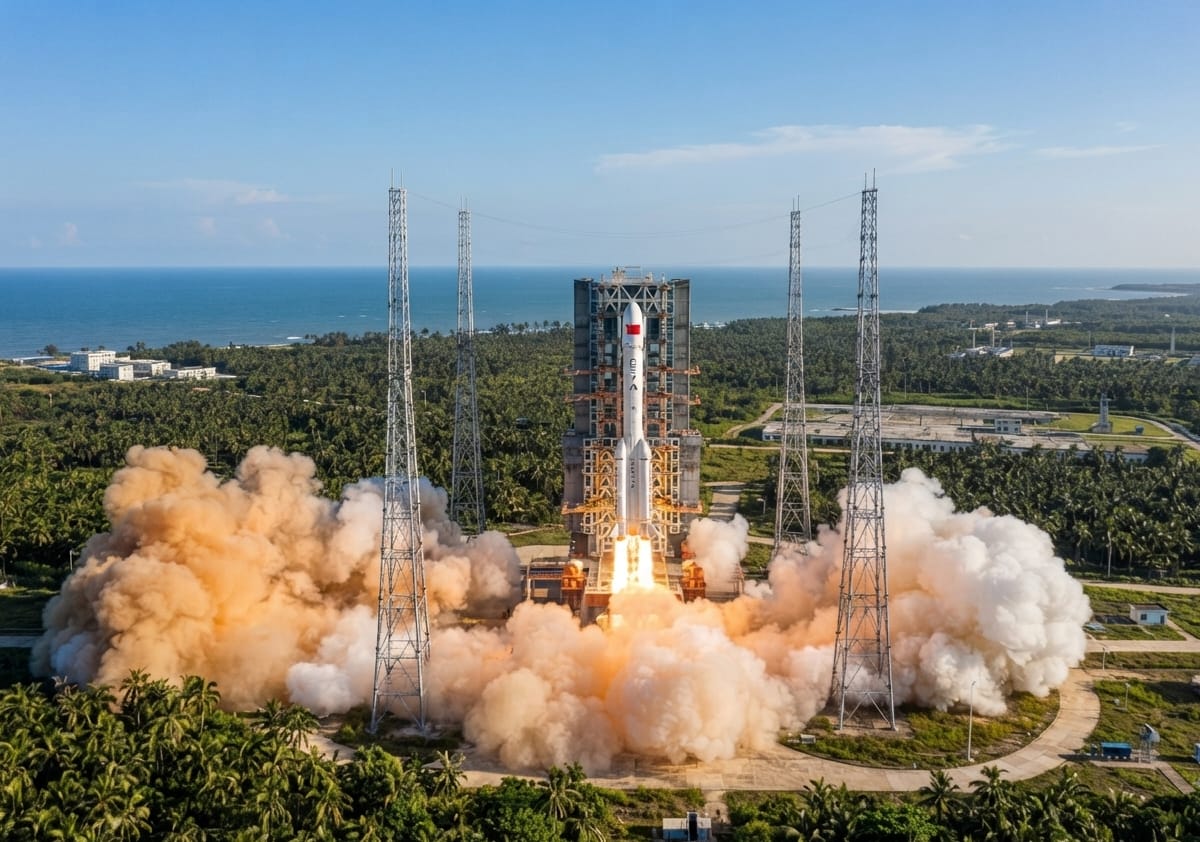
China's National Space Administration announced Thursday that its Chang'e-8 lunar mission has successfully completed a 72-hour in-situ resource utilisation demonstration on the far side of the Moon, extracting oxygen from lunar regolith and combining it with hydrogen transported from Earth to produce water in a world-first technical achievement with profound implications for the long-term human habitation of the Moon.
The Technical Achievement
The Chang'e-8 lander, which touched down in the South Pole Aitken Basin on January 14, 2026, carries a 23-kilogram resource extraction payload developed by the Shanghai Institute of Technical Physics. The payload uses an electrolyser system to decompose ilmenite, an iron-titanium oxide mineral abundant in lunar regolith, releasing oxygen that is collected and stored in a sealed reservoir. During the 72-hour demonstration window, the system processed approximately 9.2 kilograms of regolith and extracted 1.5 grams of oxygen, a modest but technically validated proof of concept.
CNSA Director Zhang Kejian described the achievement as "the first time in human history that usable oxygen has been produced from the lunar surface rather than brought from Earth." He added that the demonstration validates the technological foundation for a permanently crewed lunar research station, a goal Beijing has set for 2035 under its updated Space Science Development Plan.
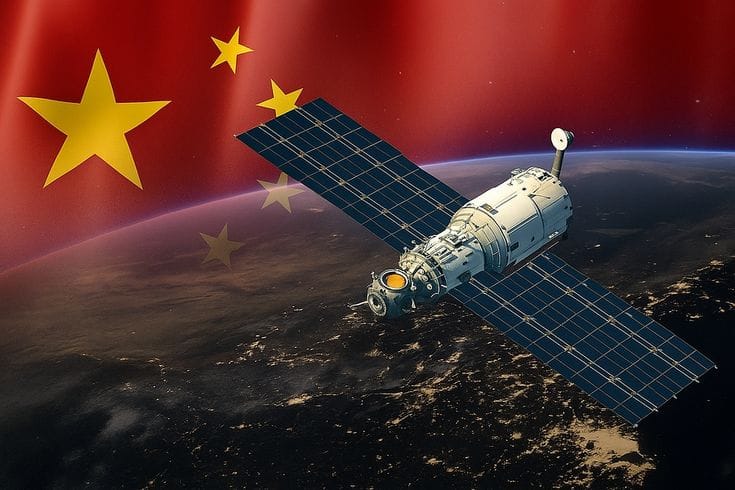
Chang'e-8 landed in the South Pole Aitken Basin, one of the largest and oldest impact craters in the Solar System and a priority target for water ice detection.
Scientific Returns
Beyond the resource utilisation demonstration, Chang'e-8 has returned a rich scientific dataset. Its ground-penetrating radar has mapped subsurface geological structures to a depth of 40 metres across a 2.4-square-kilometre survey area, revealing evidence of intact lava tube structures that could serve as natural radiation shielding for future habitation. The mission's seismometer has recorded 14 moonquakes since deployment, providing data on the lunar interior that will assist in selecting stable construction sites for future infrastructure.
Water ice mapping using the mission's near-infrared spectrometer has identified three areas within 20 kilometres of the landing site where subsurface ice concentrations appear to exceed 6 percent by weight, higher than typical estimates for the region and potentially sufficient to support water extraction at an operationally meaningful scale.
International Cooperation Dimensions
Chang'e-8 carries scientific payloads from four international partners: the European Space Agency contributed a dust analyser, the United Arab Emirates Space Agency a UV telescope, the Pakistan Space and Upper Atmosphere Research Commission a CubeSat, and the Russian space corporation Roscosmos a passive laser retroreflector. The international payload portfolio represents China's most extensive multilateral scientific cooperation on a lunar mission to date.
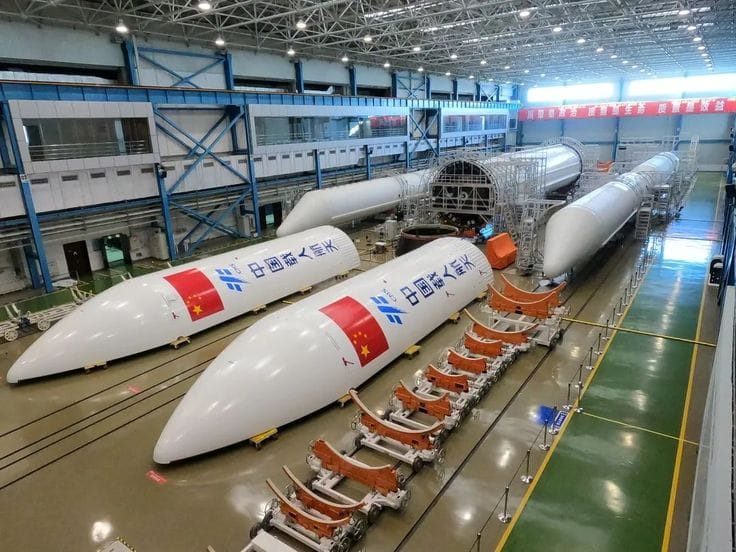
China's space programme has launched over 60 missions in the past five years, making it the world's most active national space programme by launch frequency.
Strategic Implications
The Chang'e-8 success advances China's International Lunar Research Station project, a proposed permanent lunar base to be constructed at the South Pole beginning in the early 2030s in partnership with Russia and several other nations. The project is positioned as an alternative to NASA's Artemis programme and its associated Lunar Gateway station, around which the United States has assembled a coalition of primarily Western and allied nations.
Space policy analysts at the Center for Strategic and International Studies in Washington note that China's demonstrated capability in in-situ resource utilisation represents a significant technical milestone that narrows the gap with NASA and reduces the cost and complexity of sustained lunar operations. "The ability to make oxygen and eventually water on the Moon rather than lifting them from Earth is the difference between short visits and permanent habitation," one analyst observed.
The Road to a Lunar Station
CNSA has outlined a phased programme leading to the 2035 crewed lunar station target. Chang'e-9, scheduled for launch in 2028, will deploy a rover equipped with a more powerful resource extraction system capable of producing oxygen at 100 grams per day. Chang'e-10, planned for 2030, will be a large sample return mission intended to retrieve 15 kilograms of South Pole regolith for analysis in Chinese laboratories.
The Long March 10 super-heavy launch vehicle, intended to power crewed lunar missions, is scheduled for its first test flight in late 2027. If developmental milestones are met, Chinese taikonauts could conduct their first lunar surface excursion as early as 2030, making China the second nation to land humans on the Moon approximately 60 years after the Apollo 11 mission.