
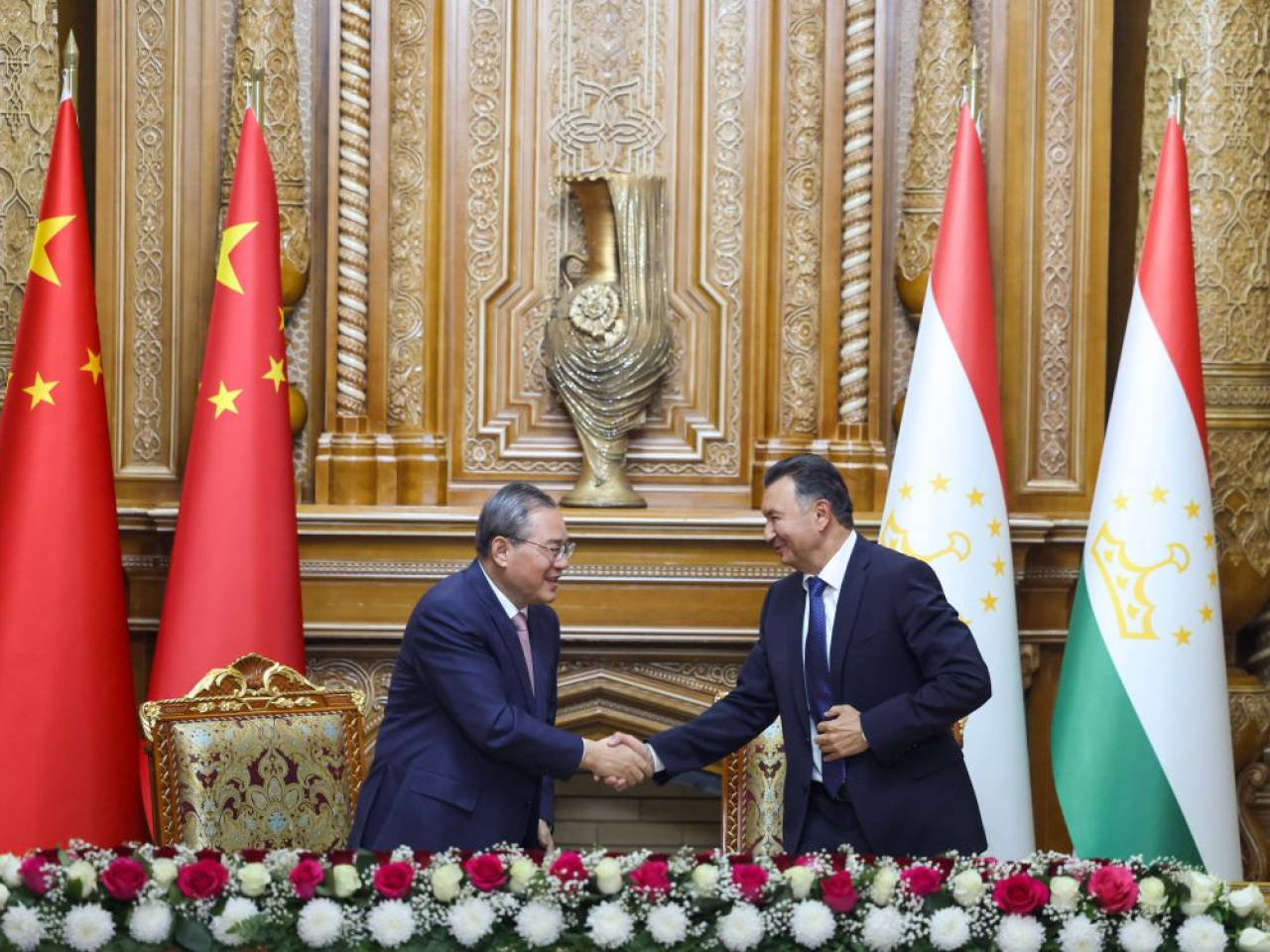
Chinese Premier Li Qiang has called for expanded economic and security cooperation between China and Tajikistan, with digital technology, artificial intelligence, infrastructure and green minerals among the areas targeted for closer collaboration. During talks with Tajik President Emomali Rahmon in Dushanbe on Monday, Li said the two countries should expand bilateral trade and develop new sources of economic growth.
Li's visit also included discussions with Iran's First Vice President Mohammad Reza Aref on the sidelines of a regional summit, where the Chinese premier reaffirmed Beijing's support for dialogue and diplomatic efforts to address tensions in the Middle East.
The meetings brought together economic cooperation and regional security at a time when China is seeking stronger ties with neighbouring Central Asian countries and maintaining diplomatic engagement with Iran. Li's remarks pointed to opportunities for cooperation in emerging technologies, infrastructure development and trade, alongside calls for countries to respect one another's sovereignty and resolve disputes through negotiations.
China and Tajikistan Seek Stronger Economic Cooperation
During his meeting with Rahmon, Li said China was ready to expand trade with Tajikistan and strengthen cooperation across several sectors, including infrastructure, green minerals, connectivity and emerging industries.
The discussions placed particular emphasis on the digital economy and artificial intelligence, areas in which China has developed extensive technological and industrial capabilities. Closer cooperation could create opportunities for businesses and institutions in both countries to exchange expertise and explore new commercial projects.
Li also called for the two countries to develop new drivers of economic growth. His remarks reflected an interest in broadening bilateral relations beyond existing areas of cooperation and identifying additional sectors that could support long term development.
Infrastructure and connectivity were among the other priorities identified during the meeting. Transport links and infrastructure projects can support trade by improving the movement of goods and strengthening connections between markets. For Tajikistan, a landlocked Central Asian country, regional connectivity is an important consideration in expanding access to international trade routes.
Green minerals also featured in Li's proposals. Cooperation in this area could create opportunities related to mineral resources and the materials required by modern industries, although the specific projects or agreements discussed at the meeting were not detailed in the report.
The two sides also addressed law enforcement and security cooperation. Li called for closer collaboration in these areas, signalling that the bilateral relationship extends beyond commerce and infrastructure to include security concerns.
However, the announcement did not specify new agreements, investment commitments or implementation timelines. Further details would be needed to determine which proposals will move forward and how they will affect trade and investment between the two countries.

Li Visits Tajikistan for Shanghai Cooperation Organization Meeting
Li arrived in Tajikistan on Sunday for an official visit and to attend the 25th meeting of the Council of Heads of Government of the Shanghai Cooperation Organization (SCO).
The SCO brings together member states for discussions on regional cooperation, economic development and security. Meetings involving government leaders provide a forum for countries to discuss shared priorities and explore opportunities for cooperation across national borders.
Li's meeting with Rahmon took place during the visit, allowing the two leaders to discuss bilateral relations alongside the wider regional agenda.
The focus on trade, technology and infrastructure reflects areas in which China and Central Asian countries can pursue practical cooperation. Improved transport links can support commercial exchanges, while collaboration in digital services and artificial intelligence can create opportunities for technology related businesses.
Security cooperation is another area of shared interest. Li's call for closer law enforcement ties indicates that both countries see security as part of their broader bilateral relationship, although the report did not identify specific initiatives or measures.
The visit also provided an opportunity for China to reinforce its engagement with Tajikistan through direct talks between senior officials. Whether the discussions result in new agreements will depend on subsequent negotiations and the development of specific projects.
China Reaffirms Cooperation With Iran
Alongside his meetings in Tajikistan, Li held talks with Iran's First Vice President Mohammad Reza Aref on the sidelines of the SCO gathering.
During the discussion, Li said Beijing was prepared to promote further progress in exchanges and cooperation with Tehran across various fields. His remarks signalled China's intention to maintain engagement with Iran while pursuing its wider diplomatic and economic relationships in the region.
China and Iran have maintained relations involving trade, energy and political cooperation. Li's statement did not identify specific new agreements, but it reaffirmed Beijing's willingness to continue developing bilateral ties.
The meeting also addressed the situation in the Middle East, where China has called for peaceful solutions to disputes and greater use of diplomatic channels.
Li said China would continue working to promote peace, stability and development in the region while upholding the principles set out in major initiatives and proposals advanced by Chinese President Xi Jinping.
He stressed that the sovereignty and security of all countries should be respected. He also called on the parties involved to pursue peace, resume dialogue and negotiations at an early date, and settle their differences through political and diplomatic means.
The remarks placed diplomacy at the centre of China's stated approach to regional tensions. Rather than identifying a specific settlement or agreement, Li urged the parties concerned to return to negotiations and resolve disputes through political channels.

Beijing Calls for Dialogue and Respect for Sovereignty
Li's comments on the Middle East reflected China's broader public position that disputes should be addressed through dialogue and diplomacy.
His call for countries to respect sovereignty and security also addressed the principles Beijing says should guide relations between states. He urged the parties involved in regional tensions to avoid prolonged confrontation and resume negotiations as soon as possible.
The meeting with Aref gave the Chinese premier an opportunity to discuss these concerns directly with a senior Iranian official. However, the report did not provide details of any specific diplomatic proposals agreed upon by the two sides.
Nor did it outline a timetable for renewed negotiations or identify which parties would participate in any proposed dialogue. Li's remarks therefore represented a public call for diplomatic engagement rather than confirmation of a new peace agreement.
The discussions nevertheless demonstrated that China's regional engagement involves both economic cooperation and political dialogue. While the meeting with Rahmon focused heavily on trade, infrastructure, technology and security ties, the conversation with Aref placed greater emphasis on bilateral relations and developments in the Middle East.
For China, maintaining discussions with regional partners provides an opportunity to communicate its position on security issues while continuing economic and diplomatic engagement.
What Comes Next for China, Tajikistan and Iran?
Li's meetings outlined several areas in which China intends to maintain or expand cooperation with its regional partners. With Tajikistan, the priorities include bilateral trade, infrastructure, green minerals, digital technology, artificial intelligence, connectivity and law enforcement.
With Iran, the Chinese premier emphasised continued cooperation and the need for dialogue to address regional tensions.
The announcements did not establish that new projects had been approved or that specific economic targets had been agreed. Their practical significance will depend on follow up discussions, concrete commitments and the implementation of any future agreements.
For businesses and policymakers watching Central Asia, the proposed cooperation in infrastructure and emerging technologies offers areas to monitor for future developments. For regional diplomacy, Li's comments indicate that Beijing intends to continue advocating negotiations and political solutions to disputes in the Middle East.
Will China turn these calls for stronger economic ties and diplomatic cooperation into concrete agreements with Tajikistan and Iran?